Why Are My Anthurium Flowers Turning Green in Fall? Explained
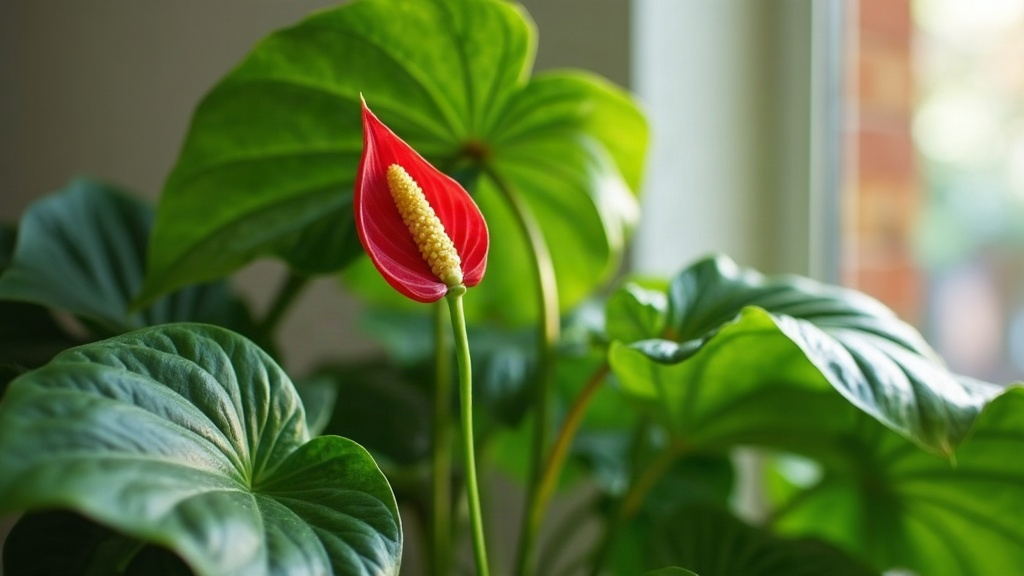
If your anthurium’s bright red, pink, or white blooms have been fading toward green lately, don’t panic. This happens to a lot of houseplants once the days get shorter, and in most cases your plant is perfectly fine. The shift is almost always tied to reduced light intensity and duration in fall, which throws off the plant’s pigment production. The good part: it’s reversible. Once you understand what’s causing it, you can keep your anthurium blooming through the colder months instead of watching it go flat and green on you.
What’s Actually Turning Green?
Quick clarification first. That colorful “flower” on an anthurium isn’t a petal at all. It’s a modified leaf called a spathe, which wraps around the actual flower spike, known as the spadix. The spathe gets its color from pigments called anthocyanins, and those are exactly what fade or shift toward green when conditions change.
Green doesn’t mean the plant is dying. It just means chlorophyll is taking over as anthocyanin production slows down.
Why Fall Light Changes Trigger the Shift
1. Lower Light Intensity
Anthuriums need bright, indirect light to keep producing the pigments behind red, pink, salmon, and purple spathes. Come autumn, a few things stack up against them:
- Days get shorter, so total light exposure drops
- The sun sits lower in the sky, which weakens intensity even right next to a window
- Natural light turns more diffuse and generally dimmer
When light isn’t strong enough, the plant shifts its energy toward chlorophyll instead of anthocyanin, simply because chlorophyll keeps photosynthesis (and survival) running. Color becomes a lower priority.
2. Shorter Day Length
These plants are sensitive to photoperiod, meaning the actual number of daylight hours matters, not just intensity. A lot of pigment production is light-triggered, so once daylight hours slip below a certain point, flower color fades toward green on its own, even on an otherwise perfectly healthy plant.
3. Temperature Drops
Cooler fall nights, especially anything below 60°F (15°C), slow down pigment synthesis too. Pair that with weaker light and you get a kind of double hit that speeds up the greening process.
4. Aging Blooms
Worth mentioning: anthurium flowers turn green as they age even in the middle of summer. It’s just part of their life cycle. Fall simply speeds that aging along, since the plant is already dealing with less light to begin with.
Is This Harmful to the Plant?
Not at all. Greening spathes are purely cosmetic, not a red flag for the plant’s health. Your anthurium can still:
- Push out new flower spikes
- Keep its foliage healthy
- Grow normally
That said, if you’re seeing green flowers alongside yellowing leaves, wilting, or black spots, that’s a different problem entirely, likely overwatering or root rot, and has nothing to do with the seasonal light shift.
How to Keep Anthurium Flowers Vibrant in Fall
Maximize Available Light
- Move the plant closer to a south- or west-facing window
- Wipe down windows and leaves (dust blocks more light than people realize)
- Rotate the pot once a week so growth and color stay even on all sides
Consider Supplemental Lighting
A basic full-spectrum LED grow light (around 6500K) running 4 to 6 hours a day can make up for the seasonal light loss and help spathes hold their color.
Maintain Stable Warmth
Keep the room between 65-80°F (18-27°C) and keep the plant away from cold drafts near windows and doors.
Don’t Overfertilize
Too much nitrogen pushes leafy growth at the expense of flowers. Switch to a bloom-boosting fertilizer with more phosphorus once fall sets in.
Be Patient with Old Blooms
Once a spathe has gone fully green, it’s not coming back to its original color, no amount of light will reverse it. Put your energy into supporting new growth instead. New spathes that form under better light will come in with truer, richer color.
When to Trim Green Flowers
When a spathe has turned completely green and the spadix has dried out or browned, go ahead and snip the stem near the base. That tells the plant to stop feeding a spent bloom and put its energy into producing fresh ones instead.
Conclusion
An anthurium turning green in the fall is just the plant adjusting to shorter days, weaker light, and cooler air, not a sign something’s wrong. Give it more light, keep it warm, and switch up your fertilizer, and you can keep it producing colorful blooms right through the season change. Think of the green phase as the plant hitting pause to save energy until brighter days roll back around.