Philodendron Birkin Reverting to Green: Causes & Fixes
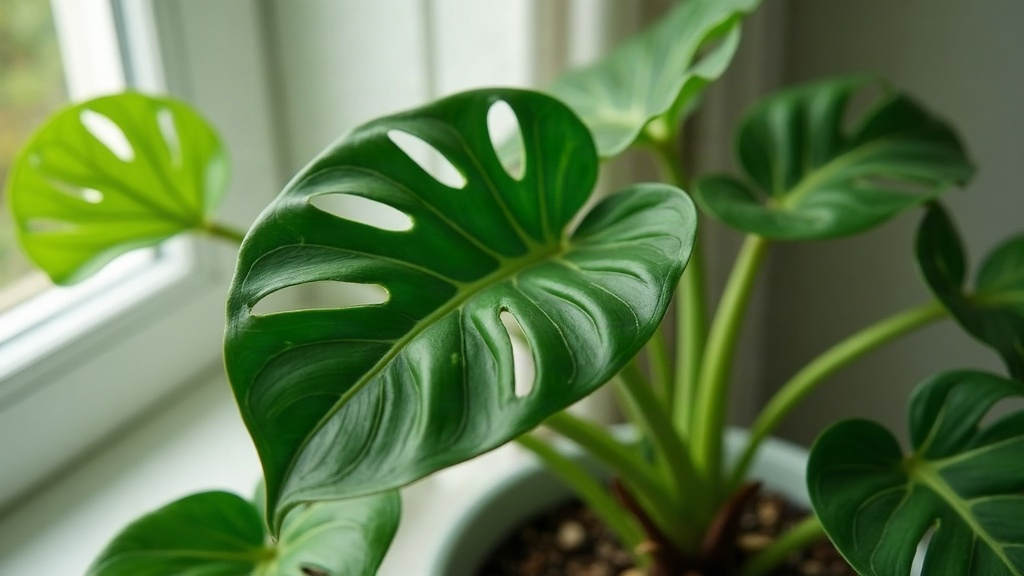
If your Philodendron Birkin is dropping its creamy pinstripes in favor of plain green leaves, it’s reverting. That’s a normal stress response tied to light, genetics, or both. The good news? In most cases you can slow it down, sometimes even reverse it, by fixing the light situation, pruning with intention, and tightening up your care routine. Here’s what’s actually going on and what to do about it.
Why Is My Philodendron Birkin Turning Green?
Birkin variegation isn’t locked in the way it is on a true albo or mint mutation. It’s a chimeric pattern, meaning it comes from unstable chloroplast genetics sitting right in the growing tip (the meristem). Because that instability is baked into the plant, the variegation can shift back and forth over time, getting stronger some months, fading in others, depending on what’s happening inside and outside the plant.
1. Insufficient Light
This is the number one culprit, by a wide margin. White and cream patches on a leaf have zero chlorophyll, which means zero photosynthesis happening there. So when your Birkin isn’t getting enough bright, indirect light, it starts compensating by growing more chlorophyll-heavy green tissue just to keep itself fed. The result: new leaves come in darker, with fewer stripes, sometimes none at all.
2. Stress from Repotting or Transport
Root disturbance, a sudden move to a new environment, or a rough shipping experience can all push a plant into survival mode. When that happens, energy goes toward basic function rather than fancy pigmentation, and reversion is often the visible sign.
3. Nutrient Deficiency
Low nitrogen (or other key nutrients) can also nudge a plant toward greener growth, since chlorophyll production depends directly on nutrient supply. Think of it as the plant choosing function over form when resources run thin.
4. Natural Genetic Drift
Even under ideal conditions, some Birkins just drift. A stem might lean more white one season and more green the next. If you spot a few solid green leaves here and there, especially on a more mature plant, that’s not necessarily a red flag. Sometimes it’s just the plant being itself.
5. Propagation from Unstable Cuttings
If your Birkin started life as a cutting from a plant that was already losing variegation, it likely inherited that same tendency. In other words, the “problem” may have started before the plant even reached you.
How to Restore Variegation on a Philodendron Birkin
Increase (But Don’t Maximize) Light
Aim for bright, indirect light for 6-8 hours a day. An east-facing window is usually ideal; a spot a few feet back from a south or west window also works well. Just steer clear of direct, harsh sun. The white sections have no chlorophyll to shield them, so they scorch fast, sometimes within a single afternoon.
- If natural light is limited (apartment with one small window, winter months, etc.), a grow light bridges the gap.
- Rotate the pot every week or so to keep growth even on all sides.
Prune Reverted (All-Green) Leaves and Stems
This is, hands down, the most effective fix you’ve got. Once a leaf or a section of stem has gone fully green, it’s not coming back. But cutting it off does something useful: it redirects the plant’s growth hormones toward a different point, one that might still have variegated potential.
Steps:
- Trace the green leaf back along the stem until you find the node where things turned fully green.
- Cut just above the last node that still shows white or cream coloring.
- New growth from that node stands a much better chance of coming in variegated.
Don’t Over-Prune Immediately
If the whole plant has gone green, resist the urge to chop it all back in one go. Do it gradually instead. A sudden, heavy pruning session adds its own stress, and stressed plants tend to revert further, not less.
Improve Overall Growing Conditions
- Humidity: 50-60% is the sweet spot. Dry air (think: next to a radiator, or in a heated apartment in January) adds stress the plant doesn’t need.
- Watering: Let the top 1-2 inches of soil dry out before watering again. Soggy roots cause more problems than they solve.
- Fertilizer: Feed once a month in spring and summer with a balanced liquid fertilizer at half strength. Skip it in winter when growth slows anyway.
- Temperature: Stay between 65-80°F (18-27°C) and keep the plant away from cold drafts, like a window that gets opened in winter.
Propagate From the Most Variegated Section
Got a stem that’s particularly stripy and gorgeous? Take a cutting from it, make sure it includes at least one node, and root it on its own. Think of this as an insurance policy: you’re locking in that pattern before the rest of the plant has a chance to drift toward green.
When Reversion Is Permanent
If a stem has gone fully green across several nodes in a row, that section is done, it won’t variegate again. The chloroplast cells responsible for the white patches simply aren’t there anymore. At that point, your best move is to prune it off completely and let the plant put its energy into fresh growth from a healthier section.
Quick Checklist
- ✅ Bright indirect light, 6-8 hours daily
- ✅ Prune green growth back to a variegated node
- ✅ Keep humidity above 50%
- ✅ Avoid cold drafts and heavy direct sun
- ✅ Fertilize lightly during growing season
- ✅ Propagate your best variegated cuttings as insurance
Final Thoughts
A Philodendron Birkin turning green is common, and it’s rarely a sign that something’s seriously wrong. It’s just the plant reacting to its surroundings. Fix the light, prune with purpose, keep care consistent, and most Birkins will start showing noticeable variegation again within a few growth cycles. The one thing you can’t rush: patience. Each new leaf takes weeks to fully unfurl and show its true colors, so give any changes you make time to actually show up before you start second-guessing them.